
✘ Dark by design: Versatility as focus
And: AI is too expensive; Udio CEO on walled gardens; The labour of live music; Concert films as the 2nd leg of a tour; Myth of the New British Invasion

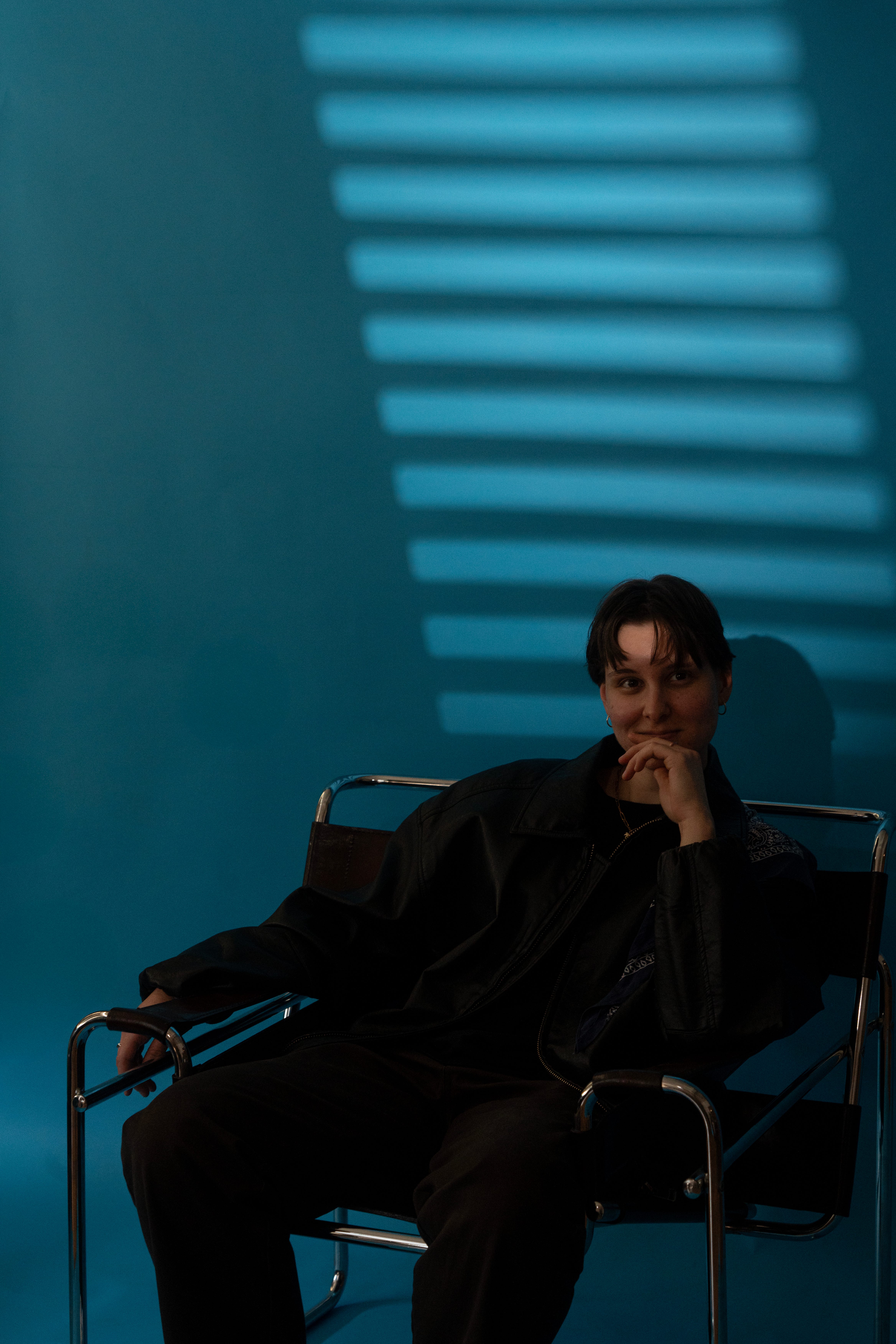
The standard advice given to emerging artists is some version of this same instruction: find your lane, narrow your focus, become the person who does one thing better than anyone else. Composer, scorer, violinist, and dancer Alex Ky has built her practice on a quiet but total rejection of that premise. For her, versatility is not the problem to be solved on the way to a creative identity. It is the mechanism by which a creative identity is formed, and, in her case, that’s specifically her own.
She is precise about this:
“Versatility is something I consider a superpower. If you’re naturally a versatile person of different artforms, holding back from versatility is what can actually stir you away from the focus.”
As a generalist myself, this resonates. Putting it slightly differently, it’s not that focus and versatility coexist despite the tension between them. It’s actually the tension itself that produces the focus.
Two traditions, one sound
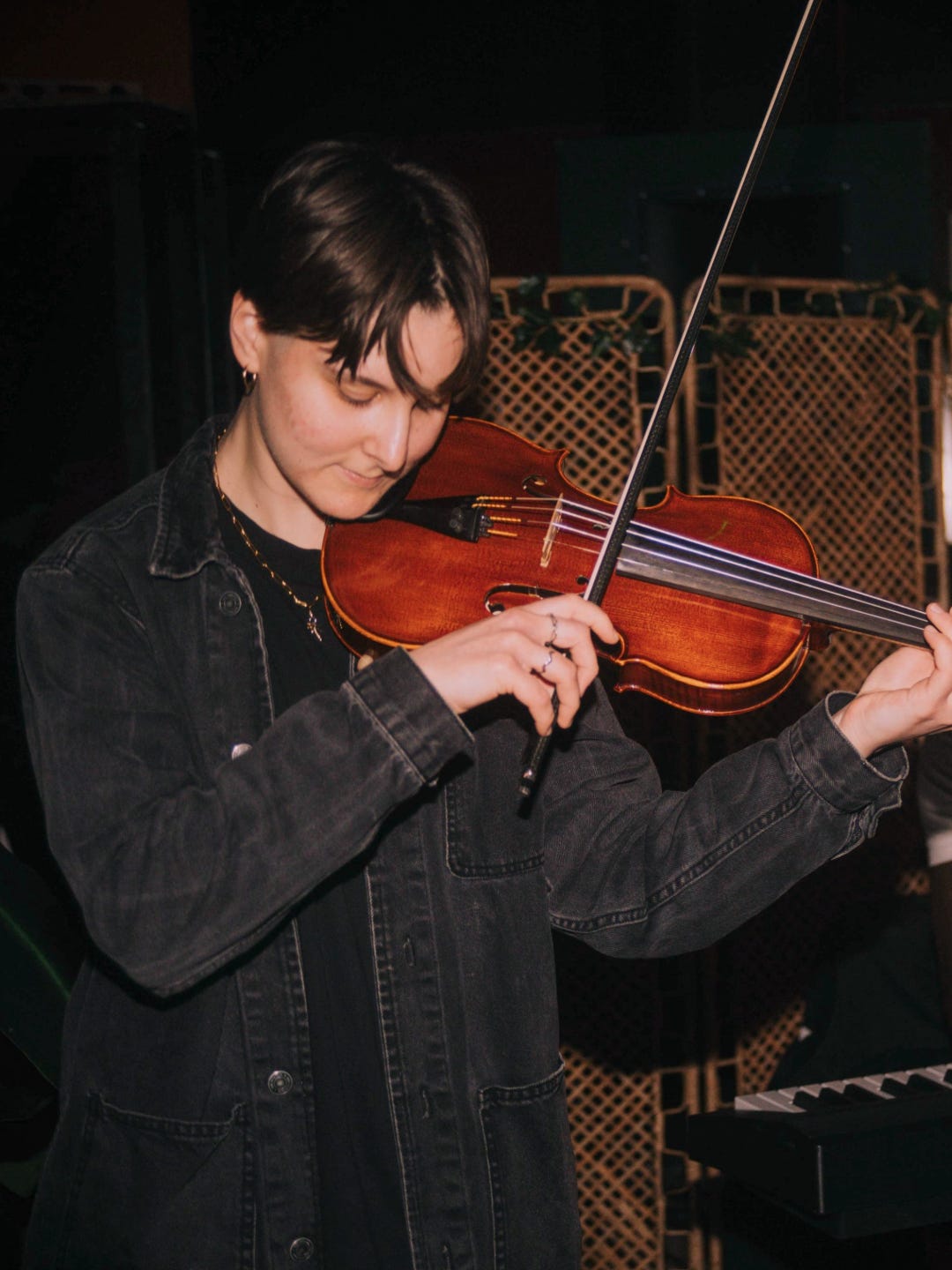
Alex trained classically on violin from the age of six. She also grew up inside R&B and hip hop dance culture. Some might feel these are incompatible worlds. One built on centuries of notation, discipline, and deference to a tradition. The other built on feel, improvisation, and music that earns its authority from the body over the score. Classical training teaches you that the rules matter and cannot be broken. Then, as she explains, you grow a little more and learn that you actually can break them, as long as there is good intention behind them. That is precisely where R&B and hip hop enter the picture. They helped reveal what the discipline of classical music was for and provided intentionality in breaking its rules.
What emerges from holding multiple traditions at once is a signature sound Alex describes as dark, ambient, mysterious, orchestral. She talks about composing music that creates space rather than occupying it. The romantic era of classical composition is a touchstone for her, not for its grandeur but for what it represented philosophically. That period was about freedom of expression and a new identity for the violin. The instrument showed people its value as capable of carrying something personal rather than something inherited. Alex hears the same impulse in the way strings function in R&B: as emotional weight instead of mere ornamentation. More than separate traditions she balances against each other, they are the same impulse running through different centuries. According to that instruction at the top of this article, moving between them should have scattered her sound, but instead it sharpened it.
Alex’s music sits in lower registers by instinct and by design. She gravitates toward darker tones because she finds them more complex, more capable of sustaining the quality she is most drawn to creating: space. The inspiration she cites is late 1990s and early 2000s R&B, artists like Brandy and Ginuwine, who built an atmosphere that was simultaneously intimate and enigmatic. Sounds that do not resolve easily, that hold the listener at a threshold rather than delivering them to a conclusion. In a landscape where sync music, by her own account, needs to sound familiar and direct, this is a deliberate refusal of the sea of sameness. The friction, as I’ve mentioned before, is the point.
The craft beneath the composition
The same logic carries into Alex’s film work. Every project brings a different voice, a different brief, a different set of cultural references to work through with a director. She does not experience this as a friction that limits her. She experiences it as the material of the job itself. The collaborative process between director and composer is, for her, one of the most compelling aspects of scoring: a sustained negotiation between someone who knows what a film needs to feel and someone who knows how to make it feel that way. What she calls the craft beneath the composition is communication - knowing what questions to ask, and knowing how to adapt when the score needs to change direction.
Alex is also clear-eared about the difference between film work and sync. Production library music needs to land quickly and serve a legible function. Film scoring offers more creative latitude and more depth to explore. The technology does not change much between the two contexts. The approach does. This ability to read a context and calibrate accordingly is itself a form of versatility, and she brings it to bear without losing any ground on what makes her sound distinctly hers.
This is consistent with something I return to repeatedly in this newsletter: that constraint is not what you work against but what you work from. What Alex demonstrates, like Lyra Pramuk, is that the portal is always the limitation. For Pramuk it was the single instrument of her own voice. For Alex it is the brief, the deadline, the director’s vision, the overloaded project file that keeps freezing. She doesn’t see these as inconveniences that impede her on the way to the work. They are, in fact, the conditions under which a signature sound gets formed.
New territory
Alex’s current project in production has pushed all this further than before. For the first time she has found herself composing with techno-like elements, building sounds that are deliberately gritty and unsettling.
“This particular project required me to make my sounds more gritty and surprising, to catch the audience off guard with the sonic energy and make them feel a little uneasy in the context of the visuals.”
It felt a bit like a departure, and she welcomed it, because the logic is the same as it ever was. The new demand is not a limit on her expression. It is a prompt towards it. A versatile artist does not experience an unfamiliar brief as a threat to their identity. They experience it as another space to move through.
Even the technical frustrations of her practice seem to feed this sensibility. Alex describes her DAW sessions as dense with layers, always pushing against the processing limits of the software. What she wishes for is the ability to stack more without disruption, to see what she can build when the ceiling is removed. She would never ask for fewer constraints. She does ask for a larger room in which to work with and against them.
Back to the source
As a recipient of the Orchestral Tools Microgrant, she sees the new tools available to her working in both directions: adding color to the dark ambient world she has already built, while also opening territory for something sonically distinct. Whether that means deepening the signature or departing from it, the instrument she returns to as her anchor is the one she started with. Her violin. Back to basics, she says. But if you’ve read this far, it’s clear that that going back to the source isn’t some form of retreat for Alex. It’s her expression of versatility. Returning to where she began but now carrying everything she gathered along the way. She finds that the beginning contains more than she first understood.
LINKS
🫰 AI is too expensive (Ed Zitron)
“The problem is simple: nobody actually knows how much AI is going to cost them in any given quarter. This means that the current token spend you’re seeing is entirely experimental, which is why organizations keep burning through their tokens so fast.”
✘ I’ve felt for a long time that a lot of money in AI just moves from one company to the next. It’s great that Ed has put actual numbers to this.
🧱 Udio CEO Andrew Sanchez on ‘walled gardens’ in AI music, Warner-Suno, and why he’s skeptical of attribution engines (Tim Ingham)
“There’s a general misapprehension about how AI technologies work. [There’s a belief] that they are like sampling machines on a huge scale – as if we’re looking at a [vast] scale of sound recordings and grabbing a little bit here, a little bit there, and stitching things together. That’s not how they work.”
✘ He’s definitely saying the right things for his label partnerships, but on this point of attribution, I’d love to find out how the likes of Sureel, Genotone, Neutune, etc. are going to respond.
🛼 Gigging in the gig economy: The labour of live music in a platformed circuit of commerce (Femke Vandenberg, Carolina Dalla Chiesa)
“In this sense, this research reveals broader transformations in cultural labour underpinned by emotional and informal economies. Twitch extends this dynamic by enabling markets in which the uncertain and processual aspects of art-making become economically productive. Musicians are not simply adapting to platform capitalism, they are performing it, monetising proximity, precarity, and process in ways that signal new configurations of labour, value, and exchange. Our study thus contributes to economic sociology by showing how platforms reorganise artistic production through circuits of commerce in which uncertainty is not merely endured but constitutive of the product itself”
✘ Great research into how the various elements of the gig economy - exemplified through Twitch livestreams - impact the work, or labour, of musicians. There is, as you may have guessed, a lot of uncertainty involved.
📽️ Concert films have become the second leg of an artist’s tour (Jeremy Young)
“As recorded music revenues became increasingly fragmented by streaming inequities, the live show transforms into the primary premium product. Concert films now allow artists to monetize that same experience twice — first in the venue, then again in theaters and eventually on streaming platforms.”
✘ This is as good a time as any to share that the Livestream Waterfall that Cherie Hu and I sketched out a couple of years ago still holds up as a really valid strategy - clipping mania or no.
🇬🇧 The myth of the New British Invasion (Annabella Coldrick)
“It’s great to have 5000 listeners around the world on streaming services, but you’re more likely to be able to tour and begin to build a career if you have 5000 fans in the UK who buy your tickets, come to your shows and buy your merch. Of course it’s best to have both and one shouldn’t be at the expense of the other.”
✘ How to build a career? It’s a question on many a tongue in the industry today. Streaming opened up the world, but now we’re struggling with making those early dispersed fans into something that can be the stepping stone to a career. Annabella suggests DSPs work to surfacedomestic artists to passive listeners. It’s an interesting play, especially considering the effects of superfan theories currently flatlining.
MUSIC
A lot of really good music is coming out right now. For today, I’ll shift your attention to TYGAPAW (Together You Gather All Power Applied Worldwide). Their latest record has come out on Tresor Records and it’s a wild mix of hypnotic melodies, high kicks, industrial beats, gabber pace. The work, according to the artist, is about regeneration. To my ears and body, this regeneration starts on the dancefloor.